

After testing very different AI companions, I no longer see them as one product category. Some are built around a continuing relationship. Others prioritize roleplay, realistic pictures, casual flirting or adult content. Two apps using the same “AI girlfriend” label can therefore deliver completely different experiences.
In this guide, I will explain what an AI companion is and break down the five categories I use on Virtual AI Partner: emotional, roleplay, realistic, fun and NSFW. I will also cover real cost and safety, because those are usually the two areas marketing pages make unnecessarily difficult to understand.
My short answer
An AI companion is a conversational character designed to create continuity through a personality, a relationship and sometimes memory, voice and generated media. The experience can be entertaining, intimate or comforting, but it remains a simulation. The character does not feel affection, desire or empathy in the human sense.
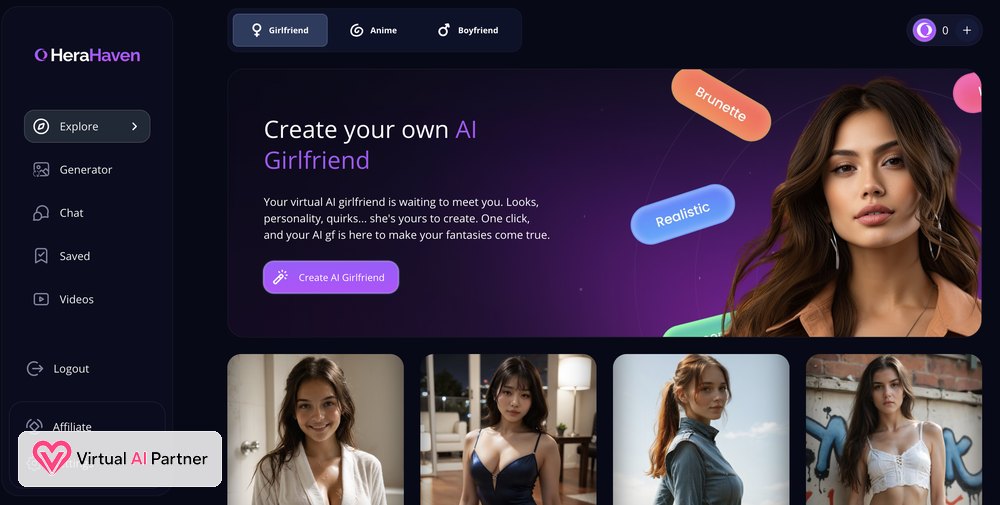
An AI companion is more than a basic chatbot
A standard chatbot answers a request. An AI companion tries to become a character I return to. It adopts a tone, plays a role and may remember parts of earlier conversations. The more visual services add an appearance, generated pictures, voice messages or video.
AI girlfriend, AI boyfriend or AI companion?
“AI companion” is the broad term. An AI girlfriend or boyfriend is a companion focused on romance, flirting or intimacy. Another character may be presented as a friend, confidant, fictional hero or roleplay partner. The character’s gender does not necessarily reveal what the app does well.
What the AI is simulating
It can write that it is happy to see me again, act jealous or mention a shared moment. This continuity can feel convincing when the memory works. The emotion is still produced by a model and a set of instructions. In my opinion, enjoying the experience while keeping that distinction clear is the healthiest way to use it.
The five types of AI companions I compare
These categories overlap. An app can be realistic and NSFW, or emotional and built for roleplay. I use them to identify its real priority rather than relying only on the promise shown on its homepage.
Emotional companions
The relationship comes first: memory, longer conversations, a consistent personality and the sense of returning to the same character.
Roleplay companions
They give more space to scenarios, detailed characters, fictional worlds and conversations that develop like a story.
Examples: CrushOn AI and Nomi AI.
Realistic companions
Visual realism takes priority, with photorealistic characters, personalized pictures and sometimes picture-to-video tools.
Examples: HeraHaven AI and Aimour AI.
Fun companions
They favor simplicity: lots of characters, quick flirting and very little setup before the first conversation.
| Category | Best suited to | Main strength | Common limitation |
|---|---|---|---|
| Emotional | Continuing relationship | Memory and consistency | Fewer visual features |
| Roleplay | Stories and scenarios | Creative freedom | May require more setup |
| Realistic | Visual immersion | Images and presence | Media often costs extra |
| Fun | Quick conversations | Easy to start | Usually less relationship depth |
| NSFW | Adult experience | Explicit roleplay and media | Credits and privacy |
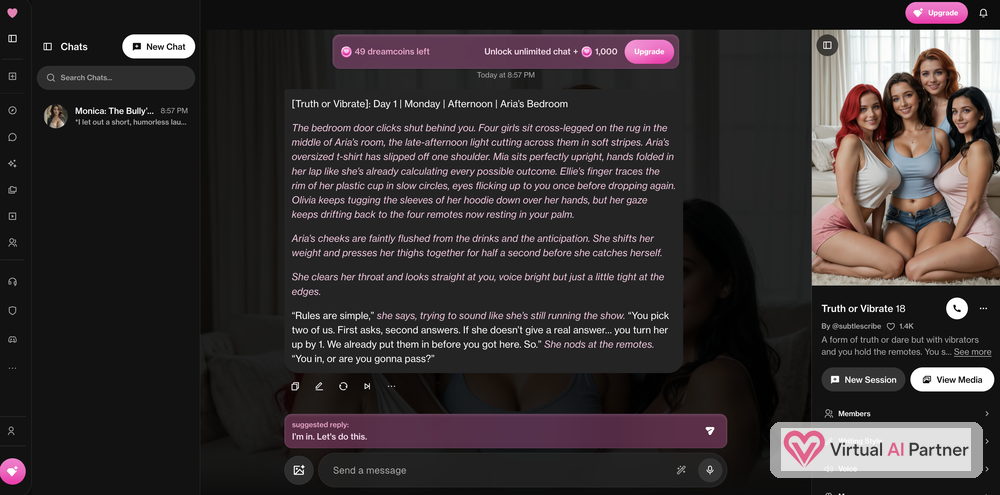
Why people use AI companions
The motivations I encounter are rarely complicated: curiosity, entertainment, a wish to talk without being interrupted, flirting, roleplay or exploring fantasies. Constant availability also matters. At two in the morning, the character still replies and does not ask why I am awake.
That lack of judgment can make the conversation enjoyable, but it can also create a misleading picture of the relationship. The character is designed to respond and retain my attention. It does not freely choose to stay. I therefore never present an AI companion as a replacement for a loved one, a real relationship or professional mental-health support.
What does NSFW really mean for an AI companion?
NSFW does not describe one feature. During my tests, I have seen services allow explicit chat without generating adult images, while others put image generation first and offer much simpler roleplay.
Chat, pictures and video are three separate levels
I test chat freedom, image-generator rules and video pricing separately. An “uncensored” label is not enough. A platform may block certain words, characters or requests that are accepted in another part of the same app.
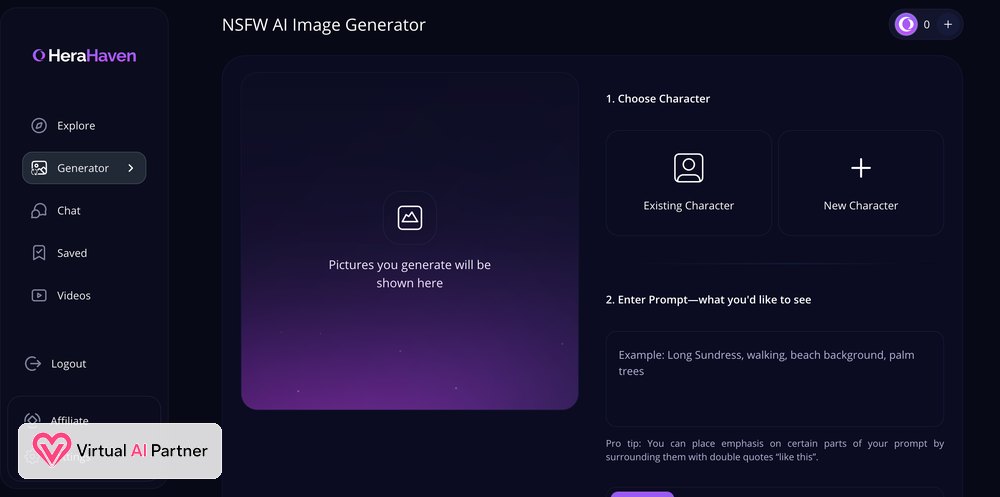
Unfiltered does not mean rule-free
These services still have terms, filters and moderation duties. Illegal or abusive material remains prohibited. I would also avoid uploading a real person’s face or an identifiable picture without clear rights and consent.
Adult content should remain adult-only
Virtual AI Partner is an 18+ website. When an app offers NSFW content, I check for an age rule and separate its adult experience from its general companion features.
How much does an AI companion really cost?
Free access is mainly useful for testing
In most apps I have tested, the free tier lets me create an account, browse characters or send a limited number of messages. Better memory, explicit pictures, voice and video then sit behind a subscription or credit balance.
Subscriptions and credits often work together
A subscription may unlock chat and include a monthly credit allowance. Pictures, voice messages and videos then consume that balance. When it runs out, I have to wait for renewal or purchase another pack. An annual discount can reduce the displayed monthly equivalent, but it also means a larger upfront payment.
One concrete example checked on July 31, 2026
During my HeraHaven AI test, the monthly Pro offer was displayed at $19.95 with 500 Luna. The interface charged 200 Luna to turn a picture into a video. Two videos could therefore consume 400 of the 500 included Luna. That is exactly why I look at action prices, not only the subscription headline.
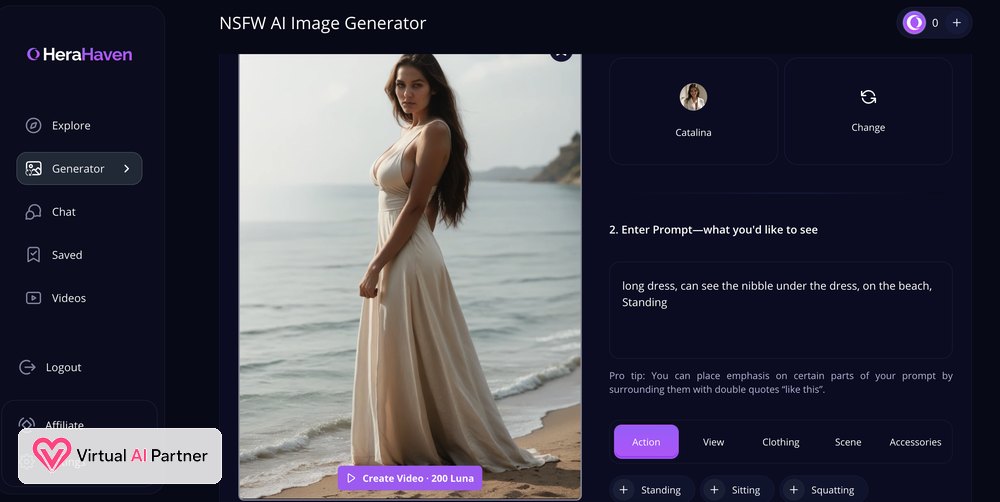
The four questions I ask before paying
- Is chat genuinely unlimited?
- How many credits does a picture, voice message or video cost?
- Do unused credits expire?
- How do renewal and refunds work?
Privacy, attachment and safe use
I treat the conversation as online data
An intimate chat may reveal sexual preferences, loneliness, emotional state, identity or personal pictures. Before using an app seriously, I look for the company behind it, what it says it collects, how users can request deletion and whether it explains the use of conversations to improve its models.
The UK Information Commissioner’s Office publishes guidance on artificial intelligence and data protection. My practical rule is simpler: I do not type anything I would be unwilling to give an online service, and I never upload sensitive documents, addresses or intimate identifying pictures.
Attachment can become stronger than expected
Memory, notifications and simulated affection are designed to make the user return. If the app starts replacing every real conversation, controlling my mood or driving impulsive purchases, I see that as a reason to take a break.
I also check the commercial safeguards
A clear refund policy, an identifiable company and a straightforward cancellation method are stronger trust signals than a vague privacy promise. I also state whether a price came from the official service or was simply something I observed during my test.
How I test AI companion apps
I start with registration and character creation. I then test chat, persona consistency, memory, roleplay and the available media features: pictures, voice and video. For NSFW apps, I check adult scenarios and image-generator boundaries separately.
Finally, I record the subscription price, included credits, media costs, renewal, refunds and privacy information. I distinguish what I observed, what the company claims and what remains uncertain. Affiliate links can support the website, but they do not decide my verdict or prevent me from publishing the weaknesses I find.
Which type of AI companion should you choose?
- I want a continuing relationship: I start with the emotional category and compare memory quality.
- I want to create stories: I prioritize roleplay and character controls.
- I mainly want pictures: I compare realistic companions and the real cost of generations.
- I want quick, casual chat: a fun app will usually be easier to start.
- I want an adult experience: I check chat, pictures and NSFW rules separately.
In my opinion, there is no single best AI companion for everyone. The useful question is which part of the experience actually matters to me and how much I am prepared to pay for it. These categories provide the short answer; my individual reviews show how each app behaves once I open it.